
IONIC
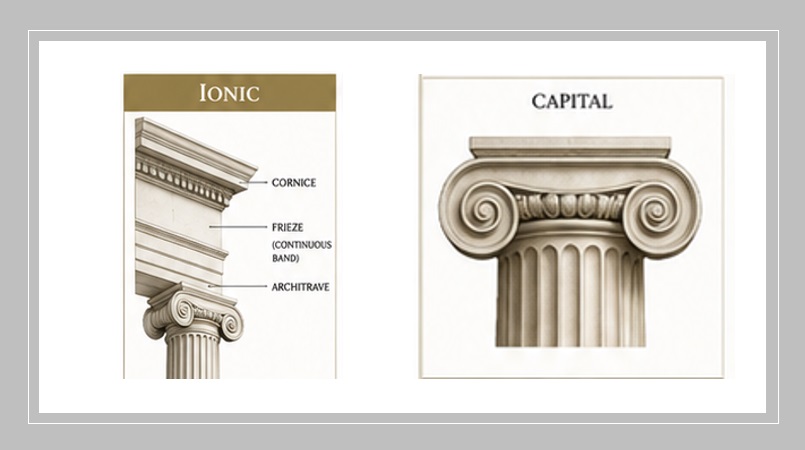
The Ionic order is one of the three principal orders of classical Greek architecture and is generally regarded as more elegant and decorative than the Doric order. Originating in the Greek cities of Ionia on the western coast of Asia Minor during the 6th century BCE, it is distinguished by its slender, fluted columns, moulded bases, and capitals adorned with distinctive spiral scrolls known as volutes. Ionic buildings often convey a sense of refinement, balance, and sophistication. The order was widely used for temples, public buildings, and monuments throughout the Greek world and was later adopted and adapted by Roman architects.
The Ionic order holds an important symbolic role within Freemasonry, where classical architecture is used as a source of moral and philosophical allegory. Characterised by its elegant proportions and distinctive scroll-shaped volutes, the Ionic column is traditionally associated in Masonic symbolism with wisdom. In many Masonic lectures and tracing boards, three classical columns—Doric, Ionic, and Corinthian—are used to represent the virtues of Strength, Wisdom, and Beauty, which together support the ideal Masonic lodge.
Within this symbolic framework, the Ionic column is often linked to the wisdom required to govern and direct human actions. Masonic writers sometimes connect it metaphorically with wise leadership, knowledge, and thoughtful judgment. This interpretation draws on the long-standing classical perception of the Ionic order as more refined and intellectual than the robust Doric order. The symbolism appears in Masonic educational materials, lodge furnishings, artwork, and architectural motifs.
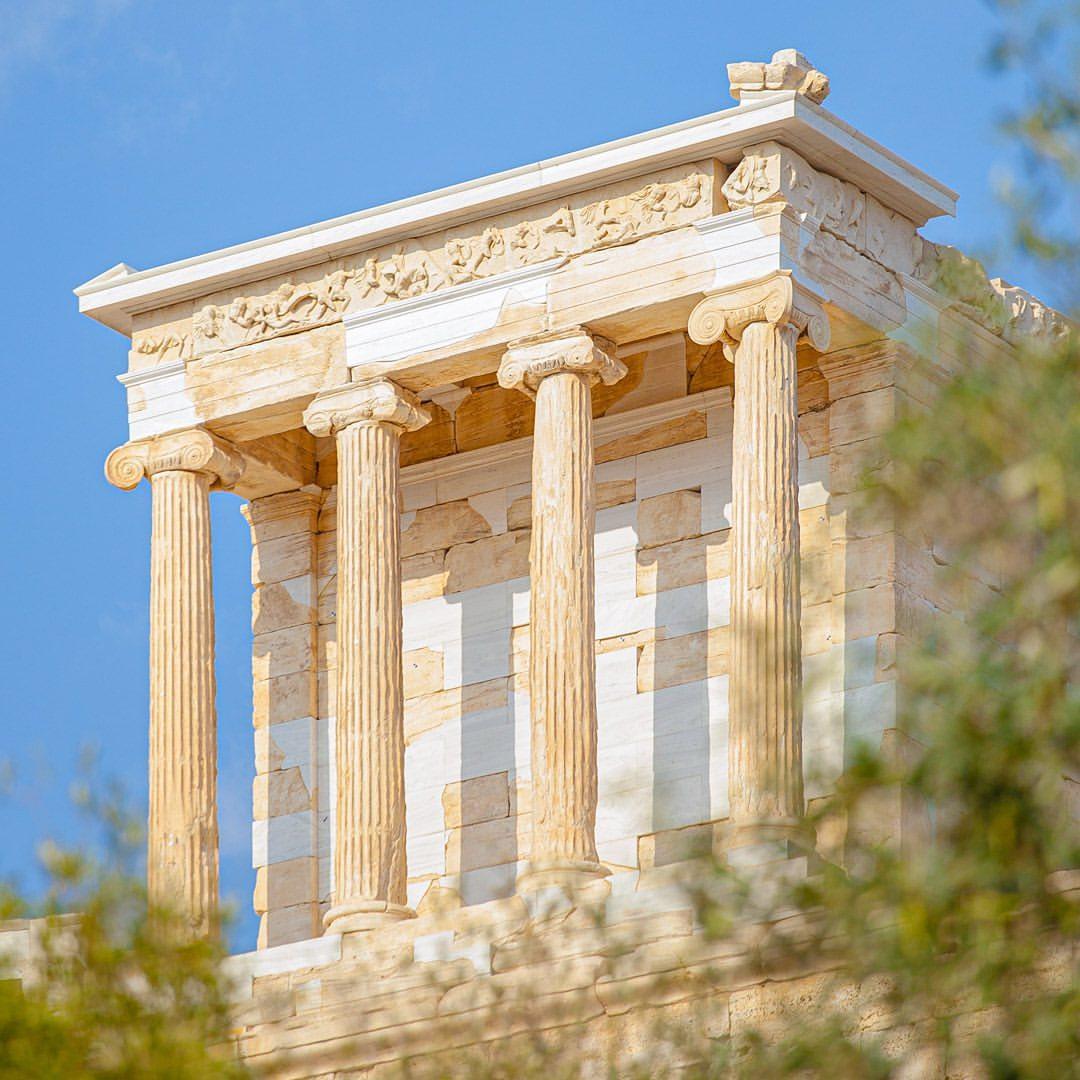
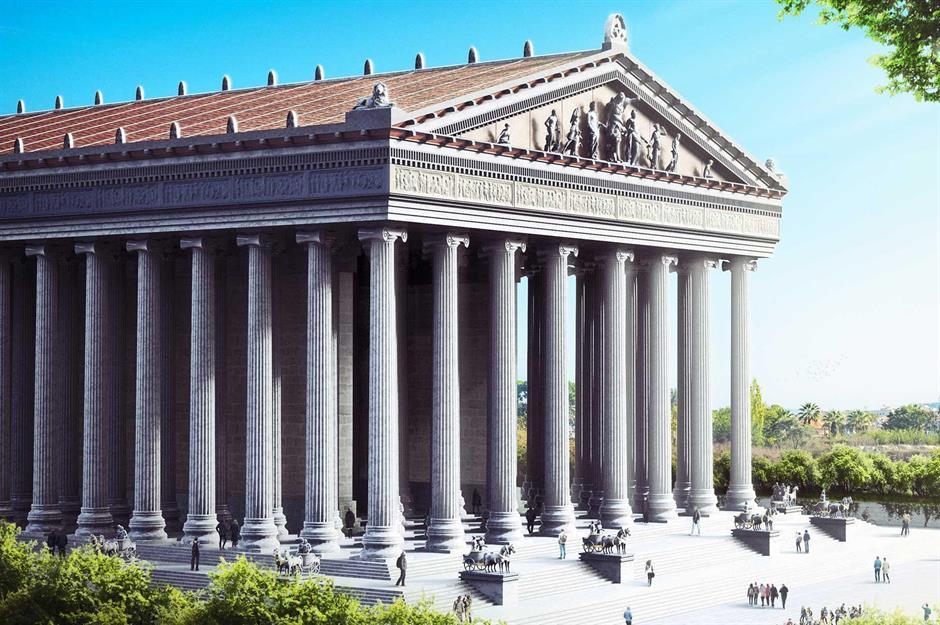
Notable examples of the Ionic order include the Temple of Athena Nike, the Erechtheion with its famous Caryatid porch, and the Temple of Artemis at Ephesus, one of the Seven Wonders of the Ancient World. During the Renaissance and Neoclassical periods, the Ionic order became popular for libraries, universities, courthouses, and civic buildings because its graceful proportions suggested learning, culture, and intellectual achievement.
If you would like to be part of a global community that has its roots firmly in the ground in Buckinghamshire, please join us by following this link: https://buckspgl.org/join?
The Ionic order is one of the three principal orders of classical Greek architecture and is generally regarded as more elegant and decorative than the Doric order. Originating in the Greek cities of Ionia on the western coast of Asia Minor during the 6th century BCE, it is distinguished by its slender, fluted columns, moulded bases, and capitals adorned with distinctive spiral scrolls known as volutes. Ionic buildings often convey a sense of refinement, balance, and sophistication. The order was widely used for temples, public buildings, and monuments throughout the Greek world and was later adopted and adapted by Roman architects.
The Ionic order holds an important symbolic role within Freemasonry, where classical architecture is used as a source of moral and philosophical allegory. Characterised by its elegant proportions and distinctive scroll-shaped volutes, the Ionic column is traditionally associated in Masonic symbolism with wisdom. In many Masonic lectures and tracing boards, three classical columns—Doric, Ionic, and Corinthian—are used to represent the virtues of Strength, Wisdom, and Beauty, which together support the ideal Masonic lodge.
Within this symbolic framework, the Ionic column is often linked to the wisdom required to govern and direct human actions. Masonic writers sometimes connect it metaphorically with wise leadership, knowledge, and thoughtful judgment. This interpretation draws on the long-standing classical perception of the Ionic order as more refined and intellectual than the robust Doric order. The symbolism appears in Masonic educational materials, lodge furnishings, artwork, and architectural motifs.
Notable examples of the Ionic order include the Temple of Athena Nike, the Erechtheion with its famous Caryatid porch, and the Temple of Artemis at Ephesus, one of the Seven Wonders of the Ancient World. During the Renaissance and Neoclassical periods, the Ionic order became popular for libraries, universities, courthouses, and civic buildings because its graceful proportions suggested learning, culture, and intellectual achievement.
If you would like to be part of a global community that has its roots firmly in the ground in Buckinghamshire, please join us by following this link: https://buckspgl.org/join?